
You’re planning a Los Cabos getaway and keep hearing about whale watching season. But when exactly does it happen? Will you miss the migration if you visit in March? Is December really peak season, or just peak prices?
The confusion is understandable. Whale season in Cabo isn’t a single moment—it’s a complex overlapping of migration patterns, breeding seasons, and resident populations spanning most of the year. One month features humpback whales breaching offshore while the next brings blue whales and gray whales to different waters.
This guide breaks down every month—when whales arrive, which species you’ll see, what makes each season special, and honestly, when you should visit if whale watching is your priority. By the end, you’ll know exactly which months align with your travel dates and expectations.
In this article:
- Whale Season Overview: The Big Picture
- December–February: Humpback Peak Season
- March–May: Shoulder Season Advantage
- June–September: Blue Whales & Quieter Waters
- October–November: Gray Whales Return
- Planning Your Trip Around Whale Season
- Conclusion
Whale Season Overview: The Big Picture
Los Cabos sits at the convergence of three whale migration routes, making it one of the world’s premier whale watching destinations. The Sea of Cortez (also called the Gulf of California) is rich in krill and fish, attracting multiple species year-round. But the massive migrations that make Los Cabos famous occur seasonally.
The three major species you’ll encounter:
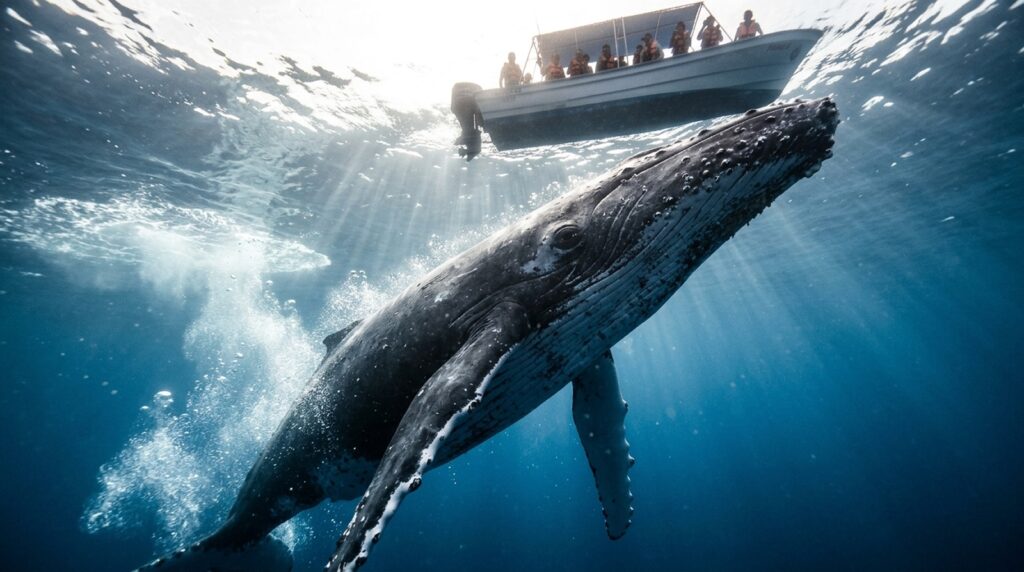
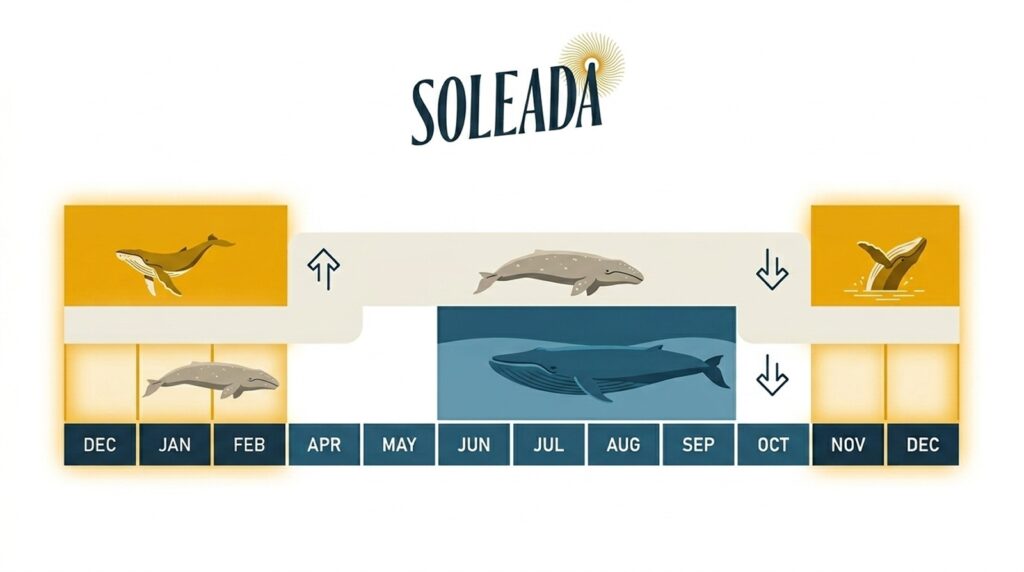
- Humpback whales: Migrate from Alaska (summer feeding grounds) to warm breeding waters December–April. This is the most famous whale season in Cabo, featuring dramatic breaching and active behavior.
- Gray whales: Travel from Arctic feeding grounds to Baja breeding lagoons October–May, passing through Los Cabos waters. Less dramatic than humpbacks but equally impressive in scale.
- Blue whales: The largest animals ever to exist, blue whales feed in Cabo waters June–September when krill blooms attract them. Sightings are less frequent but unforgettable.
The reality: you can see whales year-round in Los Cabos. But the timing, type, and abundance vary dramatically by month. Understanding this helps you plan the experience you actually want instead of arriving disappointed.
December–February: Humpback Peak Season (And Why Everyone Books Now)
What to expect:
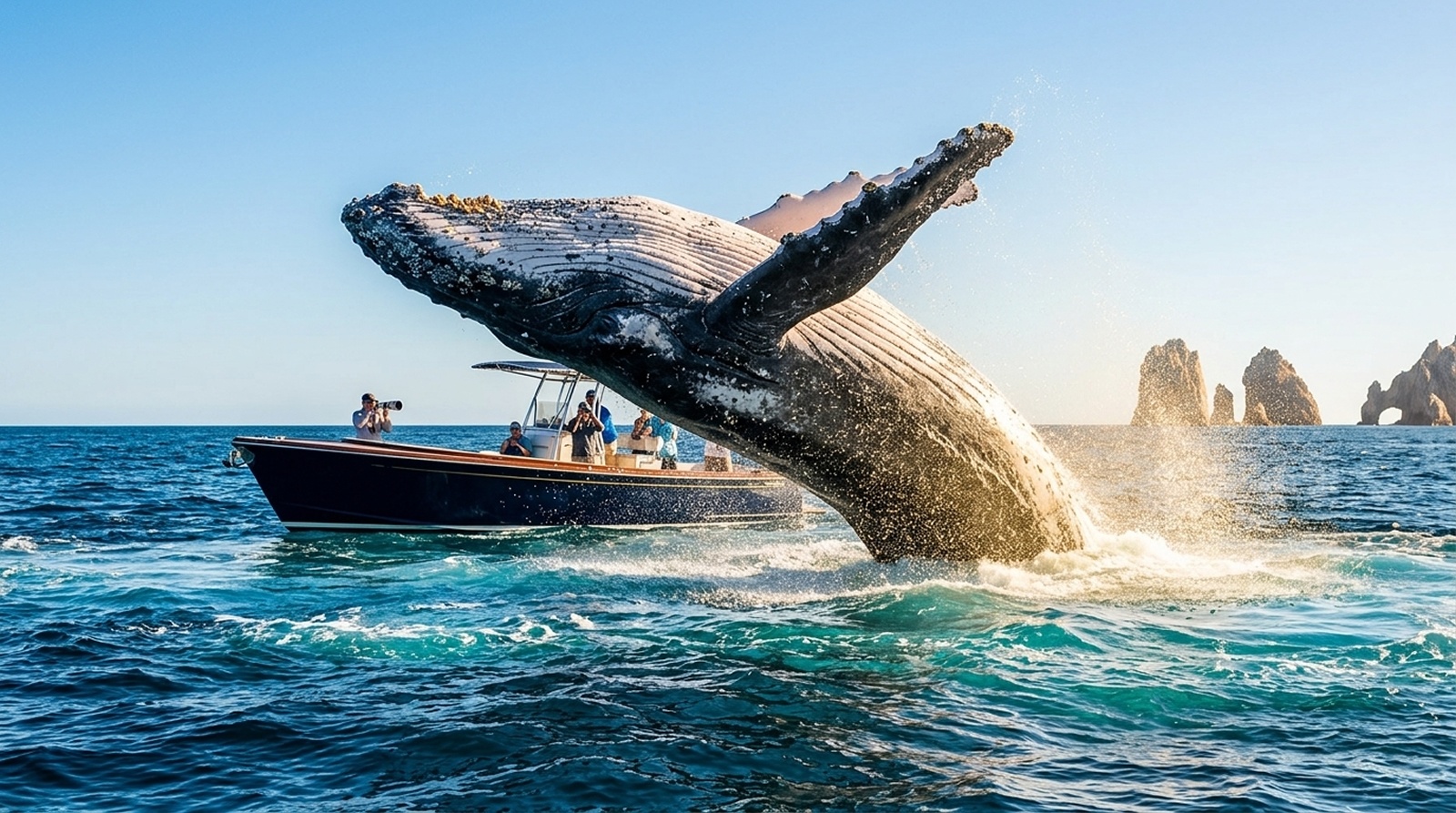
Humpback whales arrive en masse in December and peak in January-February. Expect daily sightings if you’re on the water, with multiple breaching displays, tail slaps, and active feeding behavior. This is whale watching at its most theatrical.
Why it’s famous: Humpbacks are acrobatic and unpredictable. Breaching (jumping completely out of water) happens regularly during peak season. Photographers and first-time whale watchers get the dramatic moments they expect.
The trade-offs: December-February is peak tourist season. Hotels cost 2-3x more than summer. Beaches are crowded. Whale watching tours operate with larger boats and groups. If privacy and exclusivity matter to you, this isn’t the season.
Pro tip: Book a private yacht charter from your villa instead of joining commercial tour boats. You’ll have the same whale sightings with dramatically better comfort and smaller group size.
Best for: First-time whale watchers, photographers, travelers who prioritize guaranteed sightings and dramatic behavior, families with kids who want reliable “wow” moments.
March–May: Shoulder Season—The Smarter Choice
What to expect:
Humpback whales are still present but migrating northward. Activity decreases slightly compared to January-February, but you still get reliable sightings. Gray whales are also passing through. Water temperatures are perfect (72-76°F). Crowds thin dramatically after spring break.
Why it’s underrated: Shoulder season offers 80% of the whale activity at 50% of the cost and crowds. You’re paying $500/night for a villa instead of $1,200. Whale watching tours operate with smaller boats and more personalized service.
The reality: Whale sightings are slightly less guaranteed than January-February, but still highly probable. If you’re uncomfortable with tour boats full of strangers, shoulder season pairs better with private yacht charters anyway.
April specifically is magical: pleasant weather, moderate whale activity, minimal crowds, best prices of the year. Peak humpback season has passed, but you’ll still see them regularly.
Best for: Budget-conscious travelers, groups wanting private yacht experiences, anyone who prefers peaceful beaches and restaurants, luxury villa stays at reasonable rates, repeat visitors who’ve already done peak season.
June–September: Blue Whales & Summer Solitude
What to expect:
The migration species have departed, but blue whales and finback whales arrive to feed on summer krill blooms. Sightings are less frequent than winter, but more intimate. You might encounter just 2-3 boats for the entire day’s whale watching instead of 20.
Why consider summer: If you want to see the largest animal ever to exist, this is your window. Blue whales are more serene than humpbacks—they don’t breach like acrobats, but their sheer size is humbling. Fewer tourists create peaceful experiences.
The trade-offs: Heat is intense (85-92°F). Humidity is higher. Occasional afternoon storms. Whale sightings drop to 60-70% rather than 90%+. But summer villa rates drop 40-50%, more than compensating for slightly lower sighting probability.
| Season | Primary Species | Sighting Probability | Crowds | Villa Costs |
|---|---|---|---|---|
| December–February | Humpbacks (peak) | 90%+ daily | Very high | $1,200–2,000/night |
| March–May | Humpbacks (migrating) | 85%+ daily | Moderate | $500–900/night |
| June–September | Blue whales | 60–70% daily | Very low | $400–700/night |
| October–November | Gray whales (arriving) | 70–80% daily | Low | $600–1,000/night |
Best for: Heat-tolerant travelers, budget groups, anyone who’s seen humpbacks and wants a different whale species, travelers prioritizing solitude over sightings, adventure seekers who don’t mind “maybe” outcomes.
October–November: Gray Whales Return
What to expect:
Gray whales begin their epic 12,000-mile migration south from Arctic feeding grounds. They pass through Cabo waters October–November heading to breeding lagoons in Baja. Activity increases as the month progresses. By late November, you’ll see regular gray whale activity as migration intensifies.
Why it matters: Gray whales are different from humpbacks. They’re less acrobatic but equally impressive. Migration represents one of the longest animal journeys on Earth. Witnessing it is witnessing something extraordinary.
The advantage: October-November offers the best pricing of the entire year outside of summer. Weather is perfect (70-80°F, minimal rain). Early November is genuinely one of the best weeks to visit Los Cabos across all factors: whale activity, weather, crowds, and cost.
“The gray whale migration in November combined with empty beaches and reasonable prices makes it the best-kept secret for whale watching in Los Cabos. We’ve done humpback season three times, but gray whales in November is our favorite trip now.”— Michael R., Los Angeles (November 2024 visitor)
Best for: Knowledgeable whale watchers, travelers who want peak experience without peak season cost, anyone who values weather and relaxation alongside whale watching, groups willing to trade guaranteed daily sightings for better value and atmosphere.

Planning Your Trip Around Whale Season
The decision framework:
If whale watching is your primary goal: Book December-February or March-April. Probability of sightings reaches 85%+. This isn’t just “maybe see whales”—it’s a central part of your itinerary.
If whales are a nice bonus but not the focus: Visit May-June or October-November for perfect weather, reasonable prices, and still-good whale activity without the crowds.
If you want solitude and lower prices above all: June-September delivers empty beaches, dramatic blue whale sightings (when they occur), and villas at 50% off peak season rates. Trade guaranteed daily sightings for peaceful experiences.
Pro tip for all seasons: Book a private yacht charter instead of commercial tours. From your luxury villa, coordinate with our concierge team to arrange an exclusive boat. Same whale sightings, zero strangers, champagne while you watch, and flexibility to go where the whales are instead of following a fixed itinerary.
The Soleada advantage: our concierge team knows the real-time whale activity from local captains. We coordinate timing with you, not against you. If whales are particularly active one week, we adjust your charter dates. If migration brings surprising activity, we jump on it. You get insider advantage that tourists booking generic tour operators never access.
When Should You Visit for Whale Watching?
There’s no single “best” time—it depends on what matters most to you. December-February offers the most dramatic humpback activity but comes with peak crowds and prices. March-May is the honest sweet spot: strong whale activity, reasonable prices, manageable crowds. June-September requires comfort with “maybe” outcomes but delivers solitude and intimate whale encounters.
October-November represents the underrated option: gray whale migration, perfect weather, 30-50% savings compared to peak season, and increasingly active whale sightings as November progresses.
Regardless of when you visit, whale watching transforms your Los Cabos experience from vacation into something unforgettable. Seeing a humpback breach 50 feet from your boat, or watching a blue whale surface with its 40-ton heart beating beneath the surface, creates moments that stick with you for years. The timing just determines which type of moment you’re chasing.
Ready to Experience Whale Season in Cabo?
Private yacht charters • Villa concierge coordination • Insider whale watching knowledge Book your whale watching adventure
Frequently Asked Questions
What’s the difference between humpback, gray, and blue whales in Los Cabos?
Humpback whales are acrobatic breechers with long pectoral fins, visiting Cabo December-April for breeding. Gray whales are smaller, migrate year-round, passing through October-May on epic 12,000-mile journeys. Blue whales are the largest animals ever, visiting June-September to feed on krill blooms. Each offers completely different viewing experiences—humpbacks are dramatic, gray whales represent migration miracle, blue whales inspire awe through sheer size.
How much does whale watching cost from a Los Cabos villa?
Commercial tour boats cost $80-150 per person for group tours. Private yacht charters run $1,200-2,000 for a full-day private charter (6-8 people), or $150-250 per person when split among your group. From your villa, our concierge coordinates charters, handles logistics, and ensures timing works with your itinerary. The added luxury and privacy justify the cost for most guests.
Are whale sightings guaranteed?
December-February: yes, essentially 90%+ daily. March-May: very likely, 85%+. June-September: probable but not certain, 60-70%. October-November: likely, 70-80%. Even in peak season, weather can cancel tours. Most reputable operators offer reschedules or refunds if no whales are sighted, but outcomes vary. Private charter captains working from your villa have flexibility traditional tour operators don’t.
Can you see multiple whale species in the same trip?
Yes, especially in shoulder seasons. March-May offers humpbacks and gray whales simultaneously. October-November can feature blue whale activity alongside arriving gray whales. December-February focuses heavily on humpbacks but occasional other species are sighted. The overlap periods provide incredible variety if you’re doing multiple whale-watching days during your villa stay.